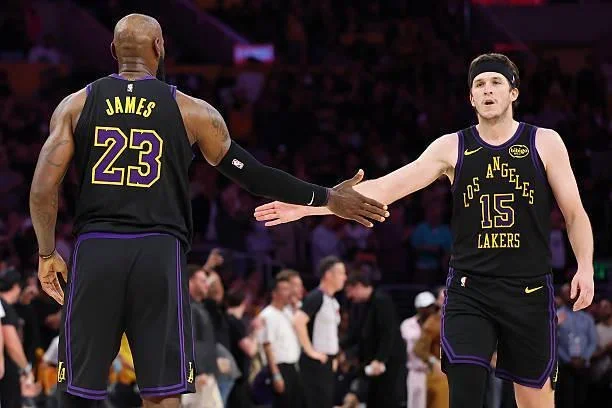

In Game 4 of the Western Conference semifinals, the Oklahoma City Thunder edged past the host Los Angeles Lakers 115-110 in a hard-fought battle. With this victory, the Thunder completed a 4-0 series sweep, marking their fourth consecutive win in the playoffs. They now await the winner of the series between the San Antonio Spurs and the Minnesota Timberwolves for a spot in the NBA Finals. For the Lakers, the loss ended their season after four straight defeats. Notably, the Thunder remain undefeated in the playoffs, and this five-point margin is the closest any team has come to beating them.
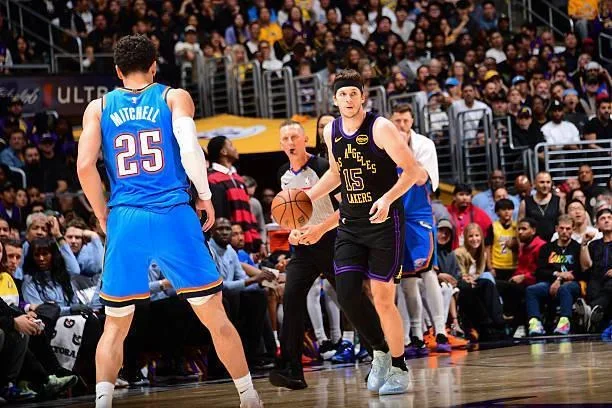
In that game, Lakers starting guard Austin Reaves gave everything he had. Playing nearly 43 minutes, Reaves shot 8-of-16 from the field, including 3-of-7 from three-point range, and hit 8-of-9 free throws for 27 points. He also grabbed seven rebounds, dished out six assists, blocked two shots, but committed eight turnovers and five fouls, finishing with a minus-6 plus-minus. Offensively, Reaves was efficient, showing off his driving ability and finishing skills, drawing a number of fouls to get to the line. He also displayed solid passing and playmaking. On defense, he competed hard, though his physical limitations made it tough for him to have a bigger impact. However, his high turnover count illustrated that he simply could not handle a heavier workload. The offensive responsibility placed on him was beyond his capacity.
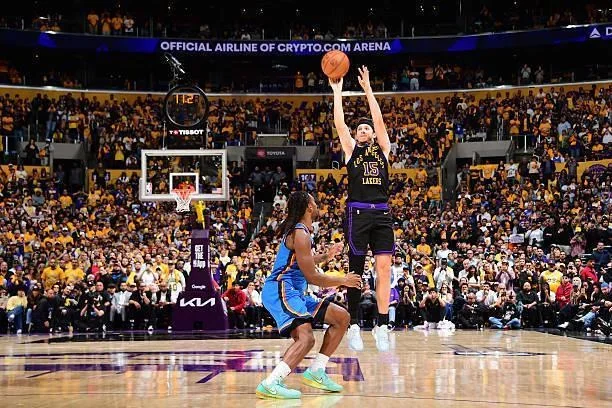
During the regular season, Reaves appeared in 51 of 82 games, averaging 34.5 minutes per game. He put up 23.3 points, 4.7 rebounds, 5.5 assists, 1.1 steals, and 0.4 blocks per game, along with 3.0 turnovers and 2.2 fouls, shooting 49% from the field, 36% from three, and 87.1% from the free-throw line. A late-season injury sidelined him until Game 5 of the first-round playoff series. In the postseason, Reaves played six games, averaging 36.8 minutes and posting 20 points, 4 rebounds, 5.8 assists, and 1.2 blocks per game, but with 4.5 turnovers and 3.5 fouls, while shooting 40.7% from the field and 25.7% from three, and 86% from the line.
Reaves’ playoff performance fell short of expectations and made one thing clear: he is not suited to be a primary option or handle a high usage rate. This leaves the Lakers with a critical decision this summer—whether to retain him and, if so, what kind of contract to offer. While Reaves may not be a max player, his value to the team is significant. Without him, the Lakers would lack a player capable of handling such a heavy offensive load, even someone who can simply dribble under pressure. Will Reaves remain a Laker next season?